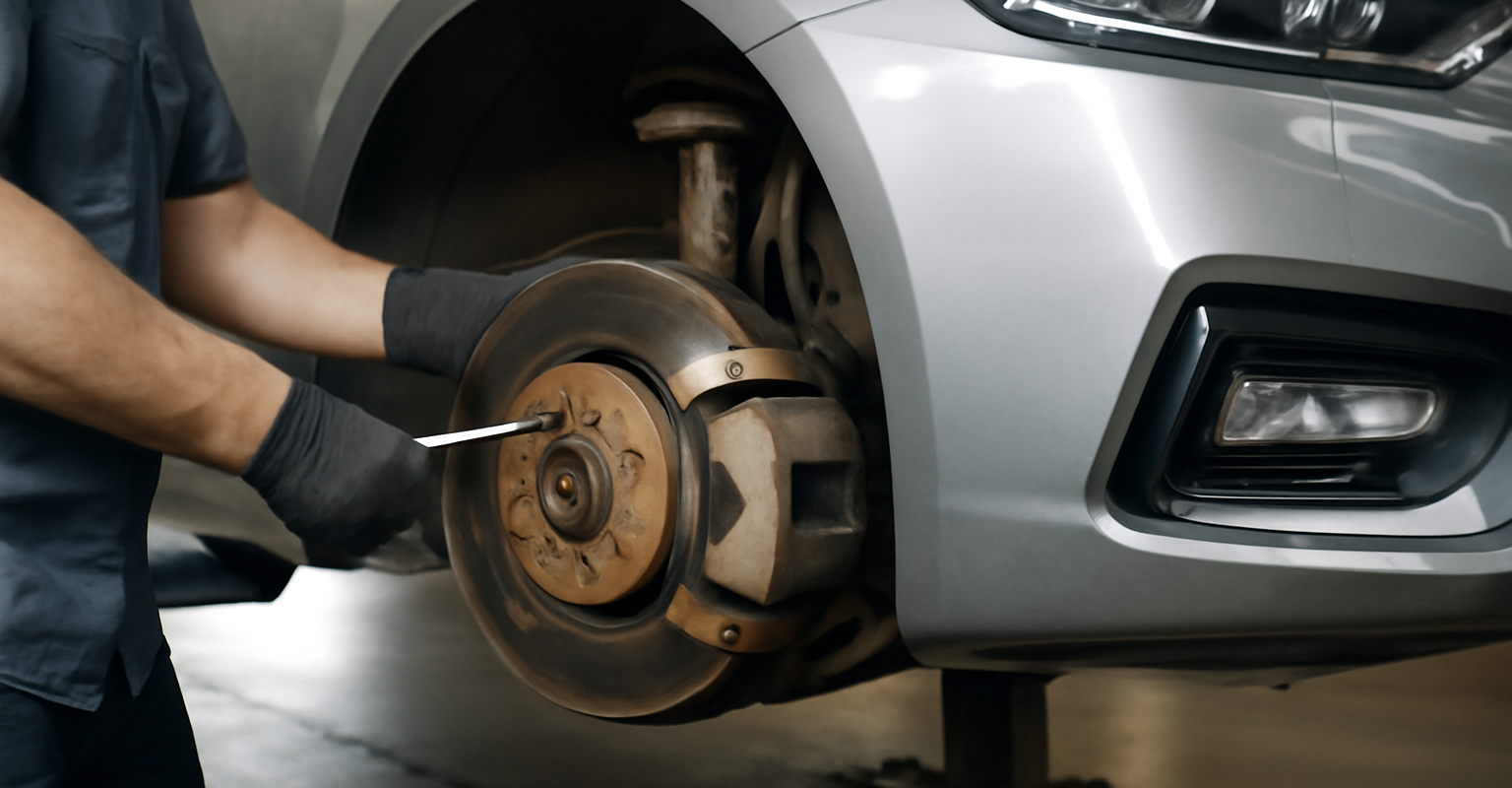
The Kia Cadenza K7 is a comfortable, well-equipped full-size sedan built for smooth highway miles and easy daily driving. Like any vehicle, its braking system wears over time, and staying ahead of that wear keeps you and your passengers safe. This guide explains how the Cadenza K7 brake system works, the warning signs to watch for, and what a proper brake repair involves.
How the Kia Cadenza K7 Braking System Works
The Cadenza K7 uses a four-wheel disc brake setup. When you press the pedal, hydraulic pressure squeezes a pair of brake pads (the friction material) against a spinning metal disc called the rotor. That friction slows the wheel. Over thousands of stops, the pads gradually wear thin and the rotors can develop grooves or warping, which is why brakes are considered a normal maintenance item rather than a one-time repair.
Common Signs Your Cadenza K7 Needs Brake Service
Brakes rarely fail all at once. They usually give you plenty of warning first. Watch and listen for these signs:
- Squealing or squeaking: Many pads include a small metal wear indicator that chirps when the pad gets thin. A steady high-pitched squeal often means it is time for new pads.
- Grinding: A harsh metal-on-metal grind usually means the pads are worn out completely and the metal backing is contacting the rotor. This calls for prompt attention.
- Vibration or pulsing in the pedal: A shudder felt through the brake pedal or steering wheel often points to warped or unevenly worn rotors.
- Longer stopping distances: If the car takes more room to stop, or the pedal feels soft or spongy, have the system inspected.
- Dashboard brake warning light: This can indicate low brake fluid or a system fault that should be checked right away.
- Pulling to one side: Uneven braking can mean a sticking caliper or an issue with one corner of the system.
What a Kia Cadenza K7 Brake Repair Includes
A thorough brake service is more than just swapping pads. On a Cadenza K7, a proper repair typically covers:
- Inspection: Measuring pad thickness, checking rotor condition, and looking over the calipers, hardware, and brake lines.
- Pad replacement: Installing fresh pads with new mounting hardware and proper lubrication on the contact points.
- Rotor service: Resurfacing or replacing rotors when they are grooved, warped, or below the minimum safe thickness.
- Brake fluid check: Confirming fluid level and condition, since old fluid absorbs moisture and reduces braking performance.
Front vs. Rear Brakes
Front brakes on the Cadenza K7 handle most of the stopping force and usually wear out first, so it is common to replace front pads more often than rear. During any brake job, both axles should be inspected so you address wear before it becomes a bigger problem.
Why Timely Brake Repair Matters
Delaying brake work can turn an affordable pad replacement into a costlier rotor and caliper repair, and worn brakes lengthen your stopping distance when it matters most. Addressing issues early protects your safety and your budget.
Book a Mobile Brake Repair with Novo Repairs
You do not need to sit in a waiting room to keep your Cadenza K7 stopping safely. Novo Repairs sends a certified mechanic directly to your home or workplace to inspect and repair your brakes on-site, with clear, upfront communication about what your vehicle needs. If you have noticed any of the warning signs above, schedule a mobile brake service with Novo Repairs and get back on the road with confidence.
Book Your Service Today
Contact Novo Repairs now for reliable mobile service. Our team will identify the issue and get your car running again with professional, on-site service you can trust.
Speak with our team to schedule service and receive a quote.