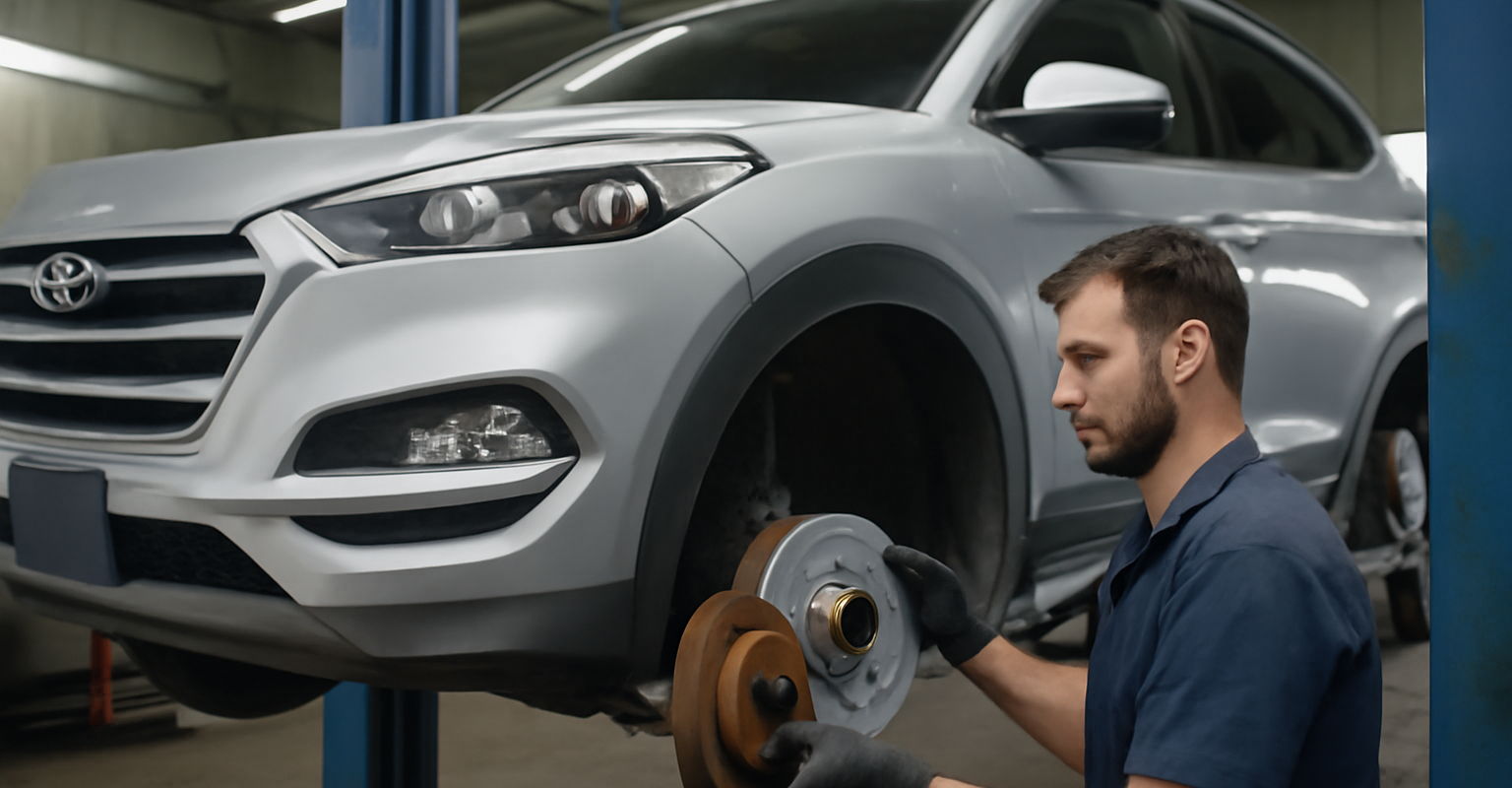
The brakes on your Hyundai Tucson are the single most important safety system in the vehicle, and they wear a little every time you drive. Because that wear happens gradually, it’s easy to miss until the warning signs become hard to ignore. Knowing what to watch for — and acting before small issues turn into expensive ones — keeps your Tucson safe and saves you money in the long run.
How the Hyundai Tucson Braking System Works
Like most modern SUVs, the Tucson uses a disc brake system. When you press the pedal, hydraulic pressure pushes the brake pads (friction blocks) against a spinning metal disc called the rotor. That friction slows the wheels. Over time, both the pads and rotors wear down and eventually need replacing.
How quickly they wear depends on how you drive. Frequent city stop-and-go traffic, towing, and hilly terrain all wear brakes faster than steady highway driving.
Common Signs Your Tucson Needs Brake Repair
Your Tucson usually tells you when its brakes need attention. Watch and listen for these symptoms:
- Squealing or squeaking: Many pads have a built-in metal wear indicator that makes a high-pitched squeal when the pad gets thin. It’s an early, intentional warning.
- Grinding noise: A harsh metal-on-metal grind usually means the pads are worn through and the rotors are being damaged. This needs prompt attention.
- Vibration or pulsing in the pedal: A shudder when braking often points to warped or unevenly worn rotors.
- Longer stopping distances or a soft pedal: If the Tucson takes longer to stop or the pedal feels spongy, have the system inspected quickly.
- Pulling to one side: This can indicate a stuck caliper or uneven pad wear.
- Warning light on the dash: The brake light can signal low pads, low brake fluid, or a system fault.
What a Tucson Brake Repair Involves
A typical brake service is a straightforward job for an experienced mechanic. Depending on what the inspection finds, it may include:
- Replacing the brake pads on the affected axle (front and rear pads wear at different rates).
- Resurfacing or replacing the rotors if they are worn, warped, or below the minimum safe thickness.
- Inspecting the calipers to make sure they move freely and apply even pressure.
- Checking and topping off the brake fluid, which absorbs moisture over time and may need flushing.
Front brakes on the Tucson typically wear faster than the rears because the front wheels handle most of the stopping force. A good mechanic will inspect all four corners and only recommend what genuinely needs replacing.
Why Timely Brake Repair Matters
Putting off brake work rarely stays cheap. Worn pads left too long start chewing into the rotors, turning an affordable pad replacement into a larger pads-and-rotors job. More importantly, tired brakes lengthen your stopping distance — a real safety risk for you and everyone around you. Regular inspections catch problems early, while repairs are still simple.
Book a Mobile Mechanic for Your Hyundai Tucson
You don’t need to sit in a waiting room to keep your Tucson stopping safely. Novo Repairs sends a certified mobile mechanic to your home or workplace to inspect and repair your brakes on-site — with a clear explanation of what’s needed and transparent, upfront pricing before any work begins.
If you’ve noticed any of the warning signs above, or you’re simply due for a brake inspection, book a Novo Repairs mobile mechanic today and get your Hyundai Tucson back to confident, safe braking.
Book Your Service Today
Contact Novo Repairs now for reliable mobile service. Our team will identify the issue and get your car running again with professional, on-site service you can trust.
Speak with our team to schedule service and receive a quote.